


Polyethylene (LLDPE / LDPE / HDPE)
Polyethylene (PE) is a thermoplastic produced by the chain polymerization of ethylene. PE belongs to the polyolefin group and is partially crystalline and non-polar. PE is the most widely used (standard) plastic worldwide and is primarily used for packaging. All types of polyethylene exhibit high chemical resistance, good electrical insulation, and good slip behavior.
Properties of PE
High chemical resistance
Good electrical insulation properties
Good slip behavior
High elasticity
High impact resistance
High resistance to acids and alkalis
Water resistance
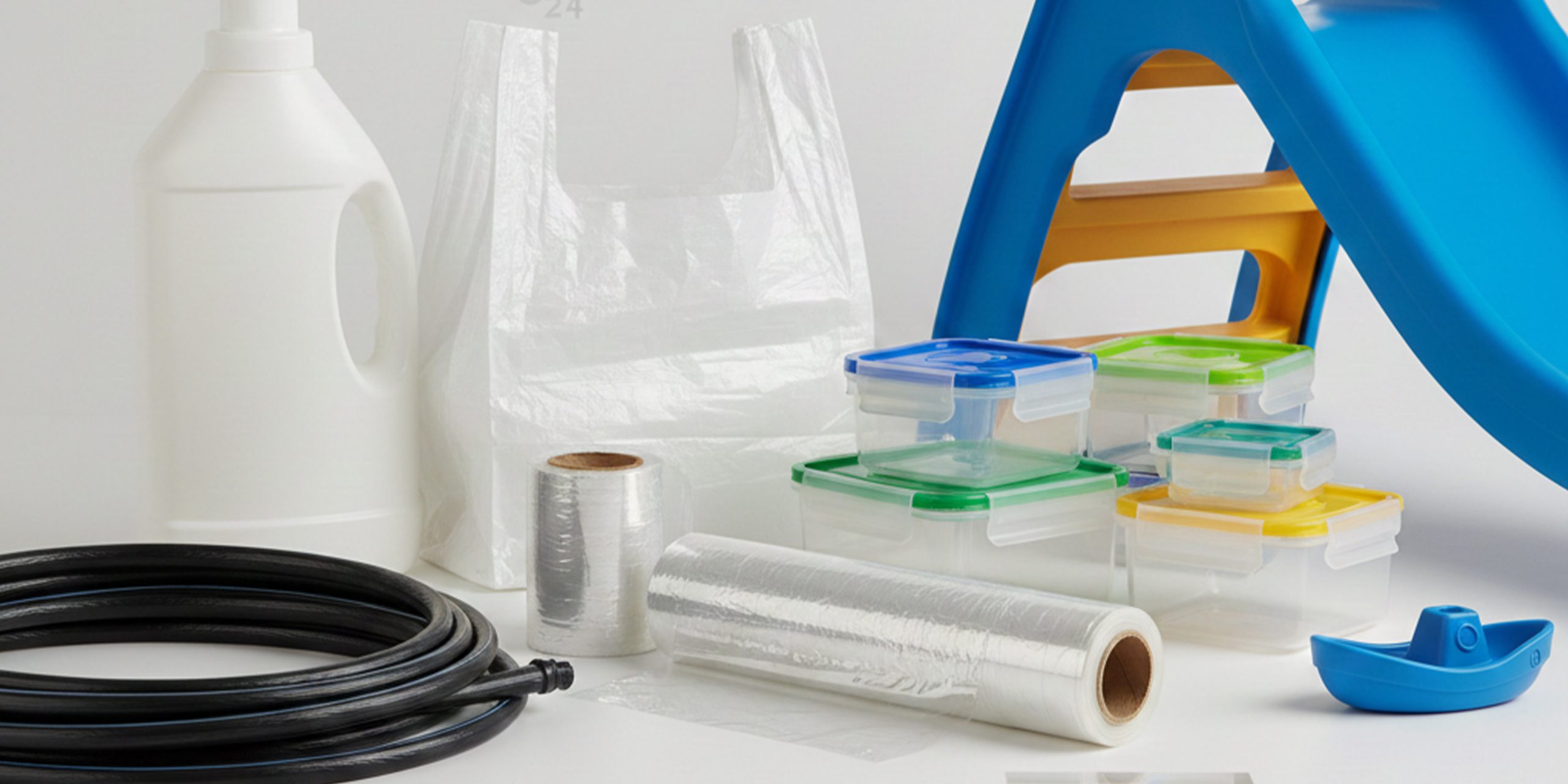
Linear Low-Density Polyethylene (LLDPE)
Linear low-density polyethylene (LLDPE) is essentially a linear polymer with a significant number of short branches. LLDPE is structurally different from low-density polyethylene (LDPE). Generally, LLDPE is produced at low temperatures and pressures through ethylene copolymerization.
Properties of LLDPE
Higher tensile strength, impact and puncture resistance than LDPE
Highly flexible and expands under stress
Good chemical resistance
Good electrical properties
Applications of LLDPE
Plastic bags, films, plastic packaging, stretch packaging, sacks, toys, caps, tubes, buckets, cable sheaths, and geomembranes.
Low-density polyethylene (LDPE) is a thermoplastic made from the monomer ethylene. Despite competition from more modern polymers, LDPE remains an important type of plastic. LDPE has a stronger branching structure than HDPE, resulting in weaker intermolecular forces, lower tensile strength, and higher elasticity. Its molecules are less densely packed and less crystalline, resulting in a lower density. LDPE is defined by a density range of 0.917-0.930 g/cm³. It is non-reactive at room temperature and can withstand continuous temperatures of 80°C.
Properties of LDPE
High flexibility
Low tensile strength
Resistance to dilute and concentrated acids, alcohols, bases, and esters
Applications of LDPE
Containers, dispensing bottles, washing bottles, pipes, plastic parts for computers, plastic bags, trays, work surfaces, game films, and plastic films.
High-density polyethylene (HDPE) is a thermoplastic polymer made from the monomer ethylene. HDPE is known for its high density, which can range from 930 to 970 kg/m³. Although HDPE’s density is only marginally higher than LDPE’s, it has a higher tensile strength than LDPE. HDPE, with its high density ratio, is used to make plastic bottles, corrosion-resistant pipes, geomembranes, and plastic wood.
Properties of HDPE
Hardness
Strength
Durability
Resistance to chemicals and moisture
Gas permeability
Easy to process and mold.
Applications of HDPE
Ballistic plates, banners, bottle caps, boats, corrosion protection for steel pipes, electrical and sanitary boxes, folding chairs and tables, fuel tanks for vehicles, and microwave telescope windows.